Why so many Aurora basements have sump pits
Large parts of the Front Range sit on clay-rich soil that swells when wet and shrinks as it dries. Builders in many newer subdivisions handle that with a perimeter drain: perforated pipe around the foundation footing that collects groundwater and sends it to a pit in the basement. A sump pump lifts the water out of the pit and discharges it outside.
For most of the year the pit may sit dry or close to it. During spring snowmelt, after heavy thunderstorms or when the lawn sprinklers run hard near the foundation, the pit can fill again and again. That's when the pump works hardest, and when a power outage or a stuck float does the most damage.
Reading what you find
- IfThe pit is full and the pump is silentThenCheck whether the pump is plugged in and the outlet has power. A tripped GFCI is common. Don't reach into the pit while the pump is plugged in.
- IfThe pump runs but the water level won't dropThenThe discharge line may be frozen, clogged or disconnected outside, or the check valve may have failed.
- IfThe pump cycles nonstop in dry weatherThenWater may be coming from irrigation, a leaking line or poor grading. Call a plumber or drainage specialist.
- IfWater is coming up through floor cracks away from the pitThenGroundwater pressure is high. Extraction can wait until the inflow is under control.
After the overflow
Get pumping again
A working pump, repaired, replaced or temporary, has to be running before drying makes sense.
Extract under the finishes
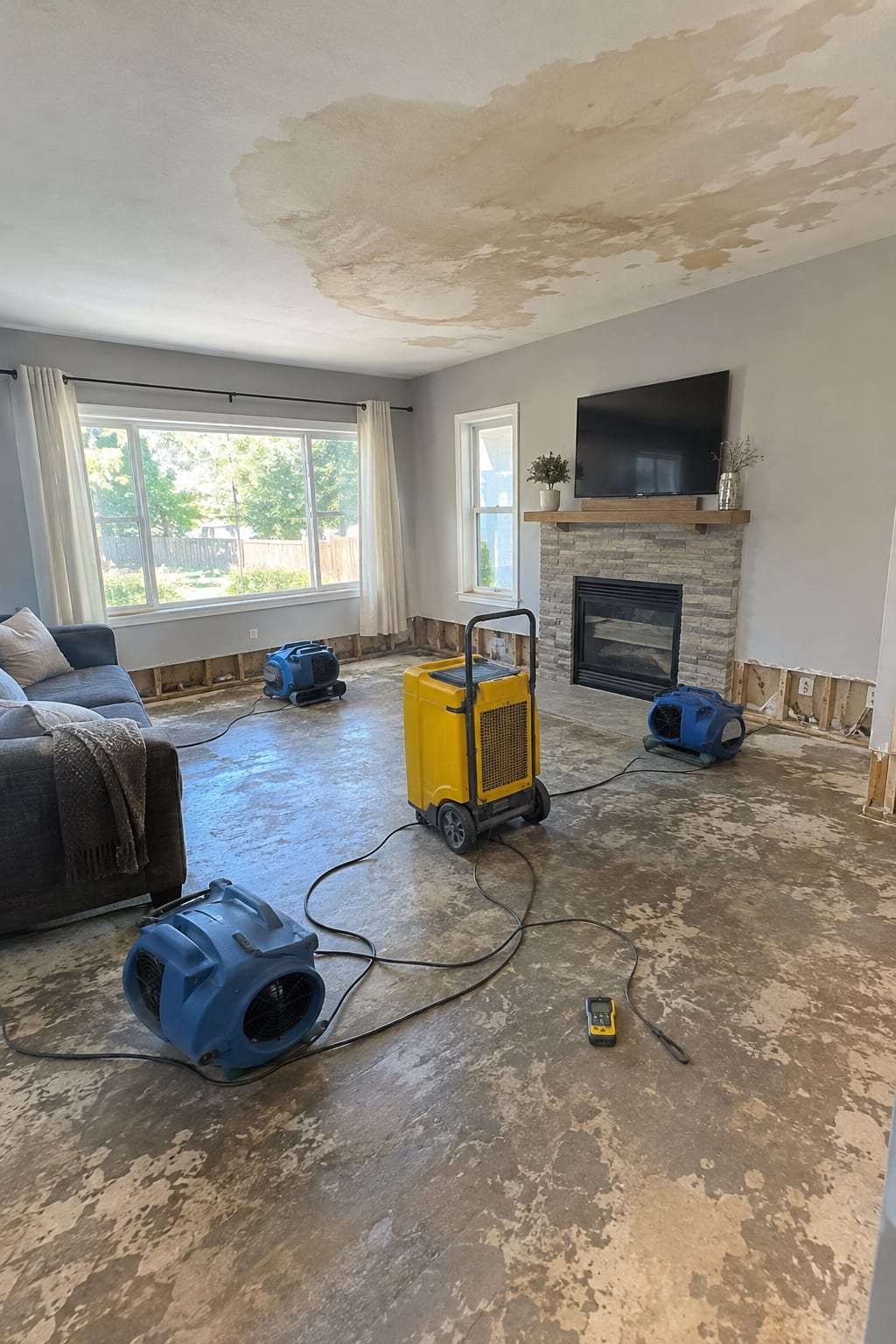
Water from the pit spreads under carpet and along the wall plates. Extraction and moisture mapping show how far it got.
Treat it as groundwater
Water that came up from outside the foundation generally counts as contaminated, which changes which porous materials stay.
Dry and verify
Basement concrete dries slowly. Wall and floor readings should reach their goals before carpet and baseboards go back.
Lower the odds next time
- Test the pump each spring by pouring water into the pit slowly until the float lifts
- Consider a battery backup pump, or a water-powered backup where allowed
- Install a high-water alarm in the pit so you hear about a failure early
- Keep the outside discharge clear of snow and ice, and extend it away from the foundation
- Ask your insurer whether water backup and sump overflow coverage is included or needs an endorsement
General information for Aurora, not a quote or professional advice. In an emergency, call 911.