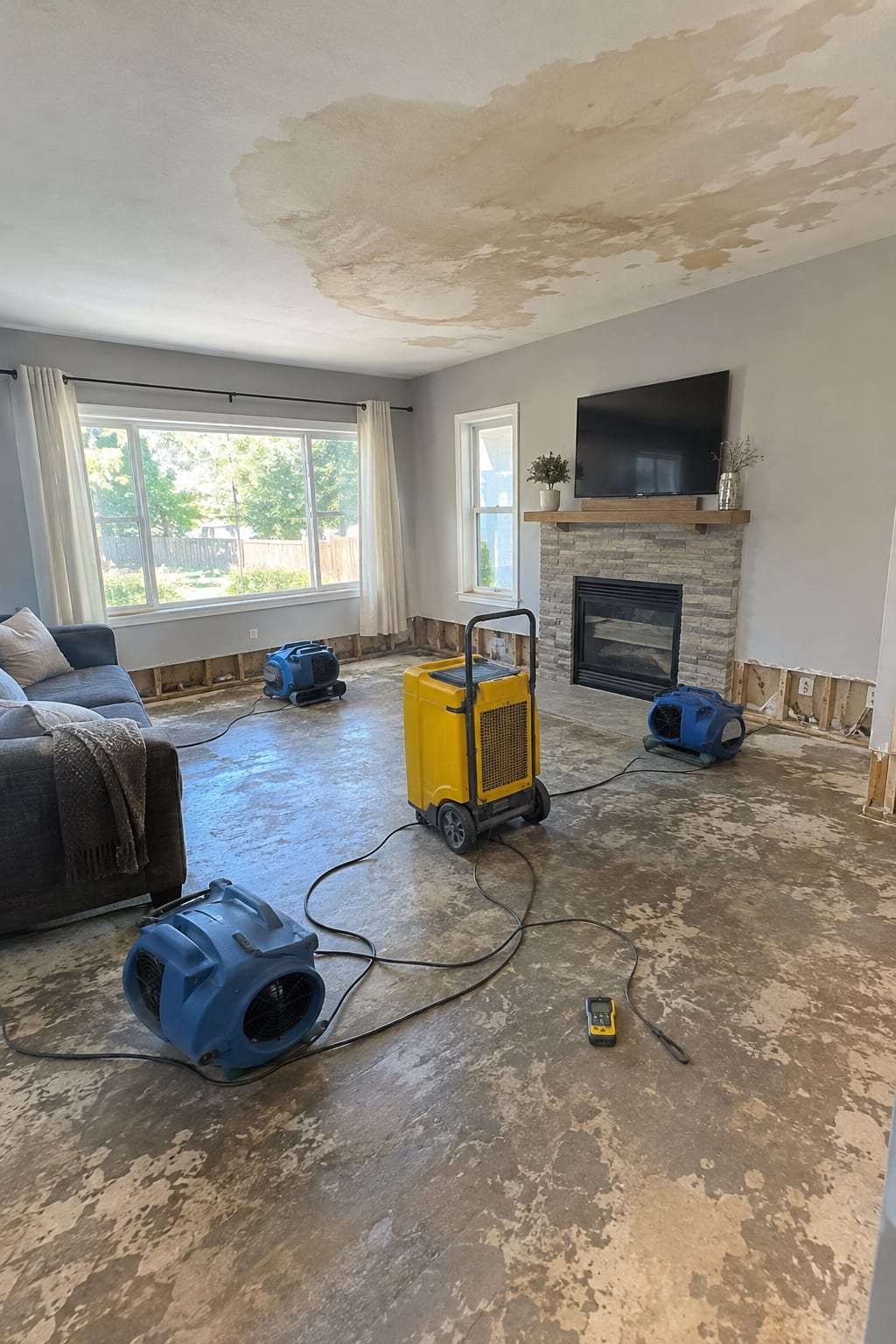
What's different here
Original Aurora, in the northwest part of the city near the Denver line, grew out of the town once called Fletcher. The housing runs from small early-1900s cottages and bungalows to postwar brick homes, with apartment buildings and commercial strips along East Colfax Avenue. Many homes have been remodeled several times, and many are rentals.
For water removal, the age of the plumbing comes first. Older homes may still have galvanized steel supply pipe, which corrodes from the inside and fails at threaded joints, or cast iron drain lines that crack. Basements, where they exist, tend to be small and partly finished, with low ceilings and mechanicals that leave little room to set up pumps and extractors.
The walls differ too. Some older homes have plaster on wood or metal lath instead of drywall. Plaster handles a brief wetting better than drywall but dries slowly, and cutting it makes more dust and debris. Older materials may also contain asbestos or lead paint, which changes how anyone can disturb them.
Quick facts for this area
- Typical housing
- Early and mid-1900s single-family homes and small apartment buildings
- Common water sources
- Aging supply lines, water heaters, cracked drain lines, sewer backups
- Wall materials
- Plaster and lath in some homes, drywall in later remodels
- Ownership pattern
- A mix of owner-occupied homes and rentals
- Permits
- City of Aurora Building Division for most repairs
Before work starts in an older home
- Ask whether plaster, textured ceilings, old flooring or pipe insulation should be tested for asbestos before anything comes out
- In a home built before 1978, assume the paint may contain lead and ask about lead-safe work practices
- Find the main water shutoff ahead of time. In older homes it may be in a crawlspace, a basement corner or a curb box
- Have a plumber look at the galvanized lines after the repair, since one failure often means more are coming
- Check whether the sewer line has a backwater valve, especially if the basement has a floor drain
Questions for owners and renters in older buildings
- Did the water come from a supply line, or from a drain or sewer line?
- How will you dry the plaster walls, and will any of it have to come out?
- Who tests for hazardous materials before anything gets cut?
- For renters: has the landlord been told in writing, and who is arranging the work?
Common questions
Does plaster always come out after a leak?
No. Plaster that got wet from clean water and is still firmly attached can often dry in place, though it takes longer than drywall. Loose or crumbling plaster usually comes out.
General information for Aurora, not a quote or professional advice. In an emergency, call 911.