The short version
- Carpet face fibers
- Usually extractable after a clean-water leak, if the work starts promptly
- Rebond foam pad
- Holds a lot of water and often gets replaced, even after clean water
- Contaminated water
- Carpet and pad it soaked are generally removed, not cleaned
- Biggest variable
- How long the water sat before extraction began
- Hidden risk
- Delamination: the backing separates as the glue weakens
Why the layers behave so differently
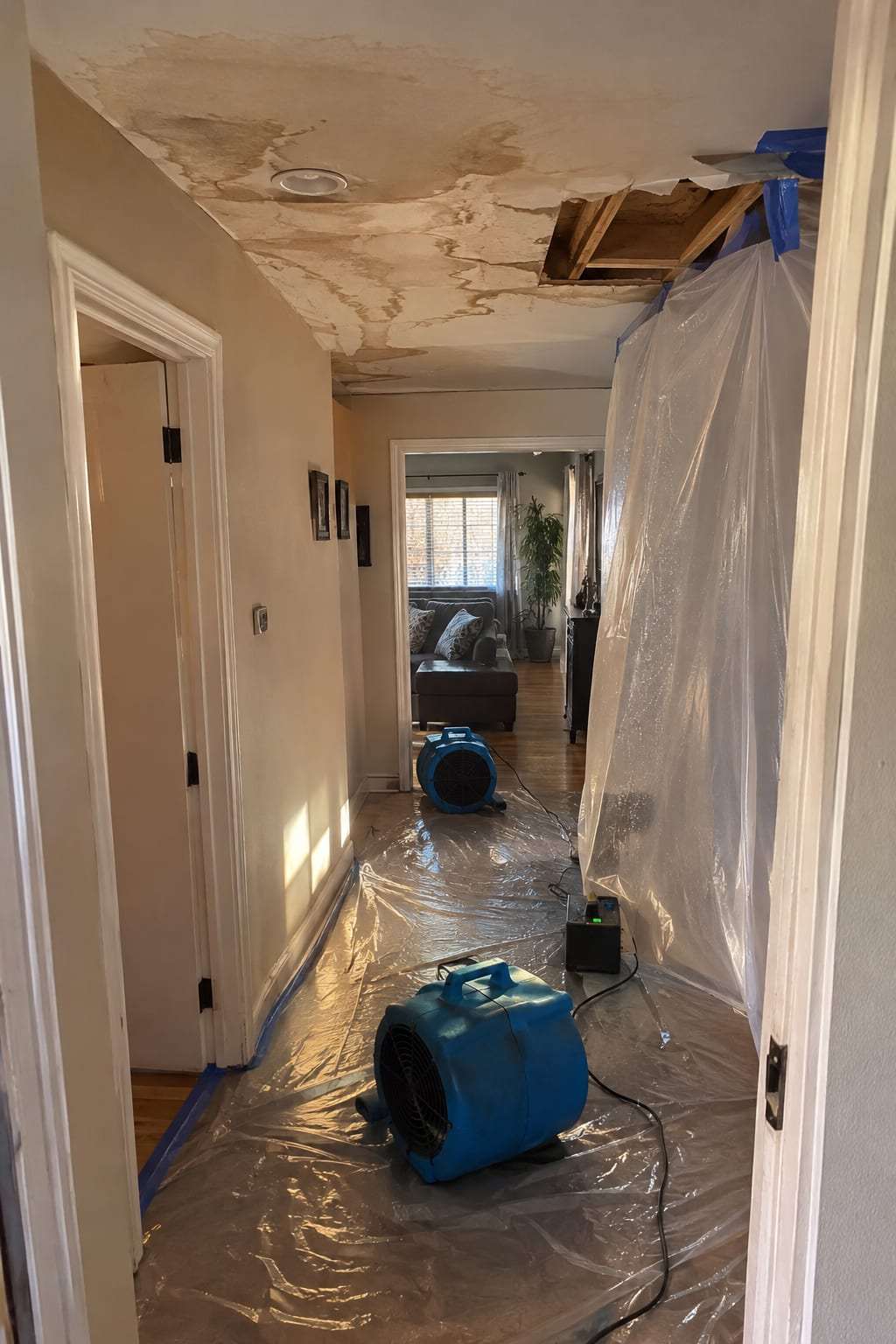
Wall-to-wall carpet in most Aurora homes is a stack. Synthetic face fibers sit on a woven backing, the backing stretches over a separate pad, and the pad rests on plywood or OSB upstairs or on concrete in a basement. Water runs through the carpet fast and pools in the pad, where open-cell foam holds it the way a kitchen sponge does.
A standard wand pulls water mostly from the carpet itself. To reach the pad, technicians use a weighted or ride-on extraction tool that presses carpet and pad together while the suction runs, squeezing water up and out. Even then, new pad costs little next to the drying days a soaked one adds, so many contractors recommend swapping it. Ask what they plan before they start, so nobody makes that call without you.
Latex adhesive holds carpet backing together. Leave it wet too long and the glue lets go and the backing separates, a failure called delamination. Delaminated carpet ripples and won't restretch flat, which turns a cleanable carpet into a replacement.
What a careful carpet save looks like
Confirm the water was clean
A supply line or water heater leak makes saving carpet possible. A toilet overflow with waste, a sewer backup or outdoor floodwater does not.
Extract carpet and pad together
Several slow passes with a weighted tool pull far more water than one quick pass with a hand wand.
Decide on the pad
If the pad is going, the carpet gets pulled back from the tack strip and the wet pad is cut out and bagged.
Float or lay the carpet to dry
Air movers blow under the lifted carpet to dry the backing and the subfloor beneath it.
Check readings, then reinstall
Once the subfloor and carpet reach their drying goals, new pad goes down and the carpet is restretched and seamed.
Keep, clean or replace
- IfClean water, extracted fast, backing still firmly attachedThenThe carpet is often worth drying and keeping. The pad often gets replaced.
- IfThe carpet has rippled or the backing peels at the edgesThenDelamination is likely. Plan on replacement.
- IfWater came from a toilet with waste, a sewer line or outside floodingThenCarpet and pad it soaked usually get thrown out, and the subfloor gets cleaned.
- IfThe carpet sat wet for several days before anyone found itThenExpect odor and possible microbial growth. Replacement becomes more likely.
General information for Aurora, not a quote or professional advice. In an emergency, call 911.