A field guide to standing water in Aurora homes, condos and commercial space
Water Removalin Aurora, CO
Pull the water out first, then prove the building is dry. This guide covers the first hour, the drying days after it, and what to ask before anyone sets up a single fan in your basement, office or hallway.
This site is a draft preview. No phone line or request form is connected yet. If anyone is hurt or water is near live power, call 911.
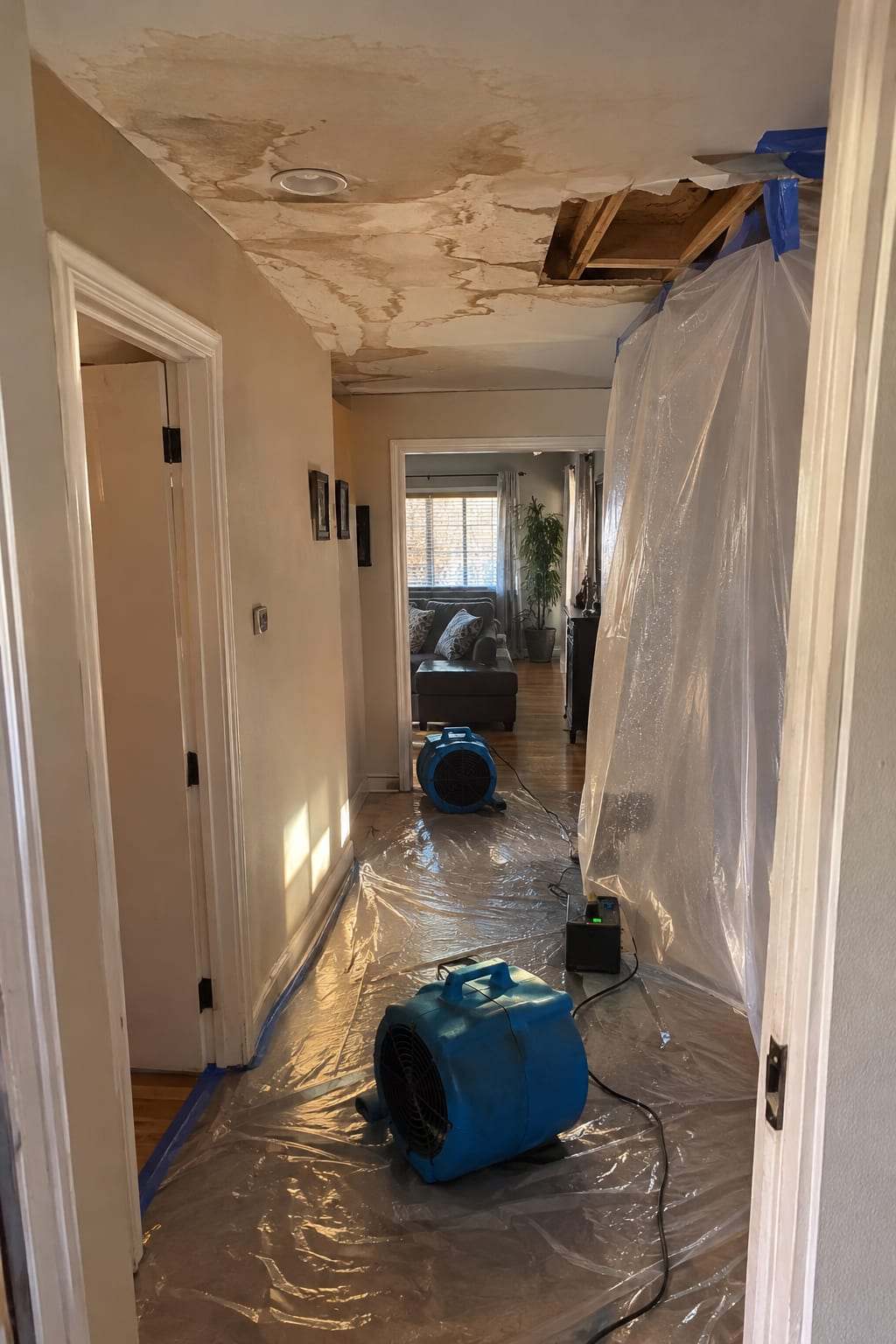
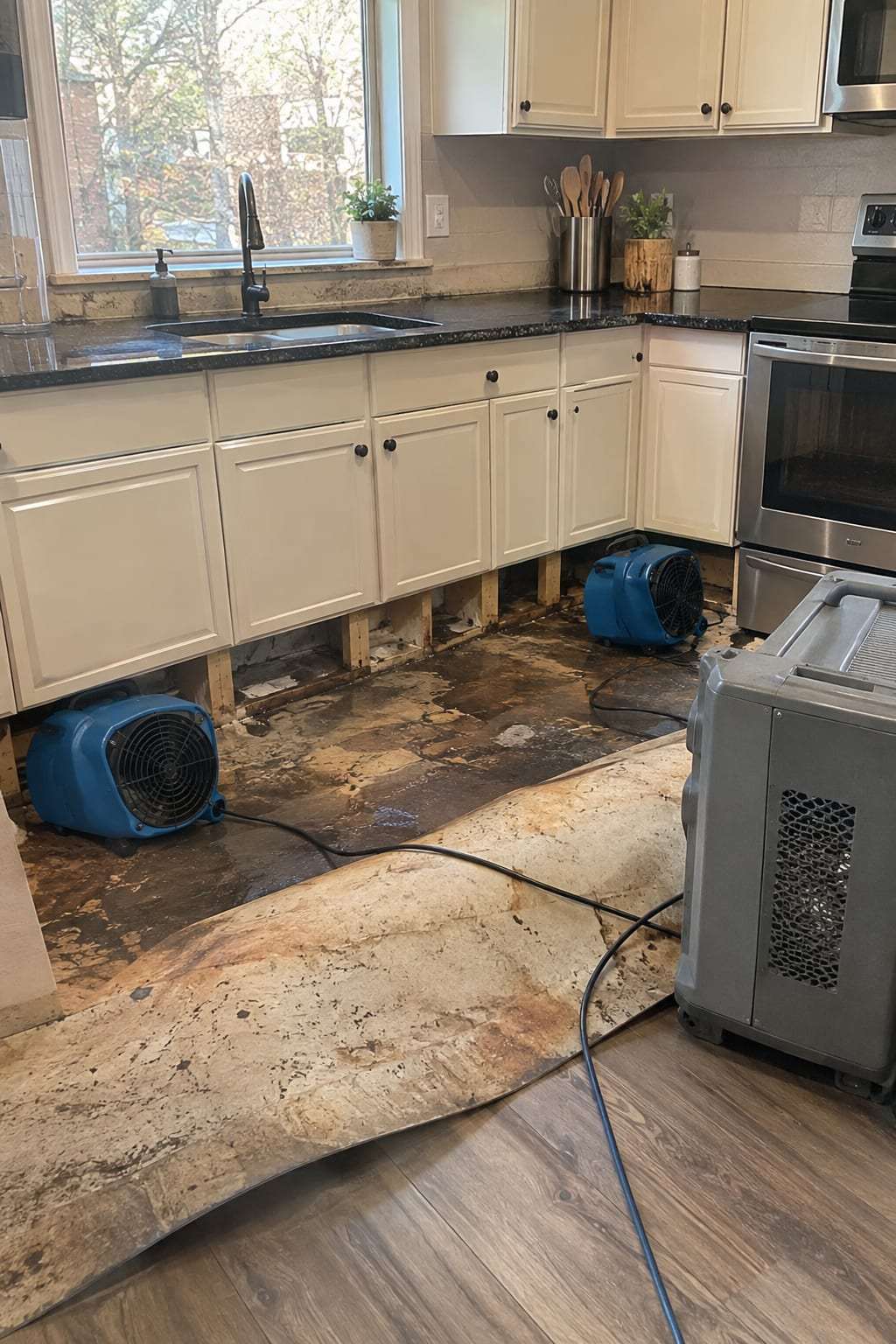
Carpet pulled back to dry the pad and subfloor.
Water damage runs on a clock
What you do in the first few minutes decides how much material comes out of the building later. Here is the order that matters.
-
Minute one
Stop the source and get people out of wet rooms. Cut power at the panel only if you can reach it without standing in water.
-
The first hours
Pump standing water and extract carpet and pad. Removal saves the most material when it starts early.
-
24 to 48 hours
Mold can start on materials that are still damp. Drying equipment should be running well before this.
-
Every day after
Take moisture readings daily. The job ends when materials reach their drying goals, not when the floor feels dry.
Every gallon a pump takes out is a gallon that never soaks into your walls
A gallon pulled out by a machine is a gallon that never has to evaporate into your drywall, framing and air.
Water removal is the physical part of the job: pumps for standing water in basements and on slabs, then extraction tools for whatever carpet, pad and porous surfaces are holding. A gallon pulled out by a machine is a gallon that never has to evaporate into your drywall, framing and air. Pumps clear water in hours, while evaporation alone takes days and drags the damage with it.
Aurora gives that work a lot of variety. You'll find postwar ranch houses in the northwest, slab townhomes, new builds east of E-470, medical offices around Anschutz, warehouses along I-70 and apartment communities in between. A good job sizes the equipment to the space and keeps taking moisture readings after the puddles are gone, until the materials themselves test dry.
Before you hire anyone, ask to see the IICRC water damage certification held by the technicians who will do the work.
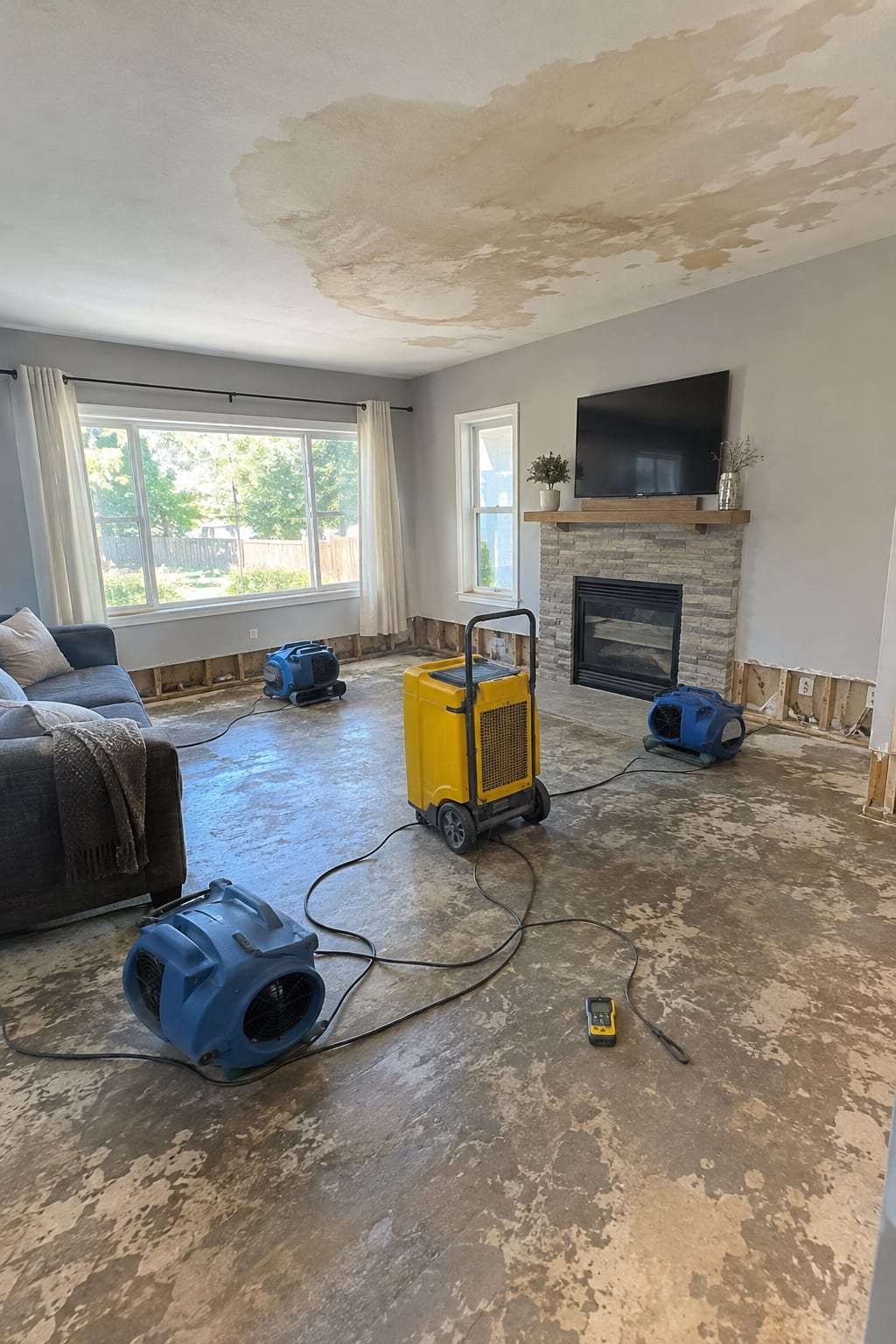
An air mover set at the edge of wet carpet.
Call for extraction when you see any of these
If water is touching drywall, carpet or wood, the clock above has already started.
-
Standing water on any floor at any depth. Carpet and hardwood start drawing it in right away.
-
Water in a basement or crawlspace after a burst line, a failed sump pump or a storm.
-
Water spreading across a commercial floor: carpet tile in an office, a retail sales floor, a shared corridor.
-
A fire sprinkler head that went off, or a broken fire line, anywhere in a commercial building.
A house and an apartment building are two different jobs
The machines work the same way in both. Who decides, who gets in and who pays do not. Aurora has whole neighborhoods of owner-occupied homes and a large stock of apartments and condos, so the first hour goes faster when you know which one you're standing in.
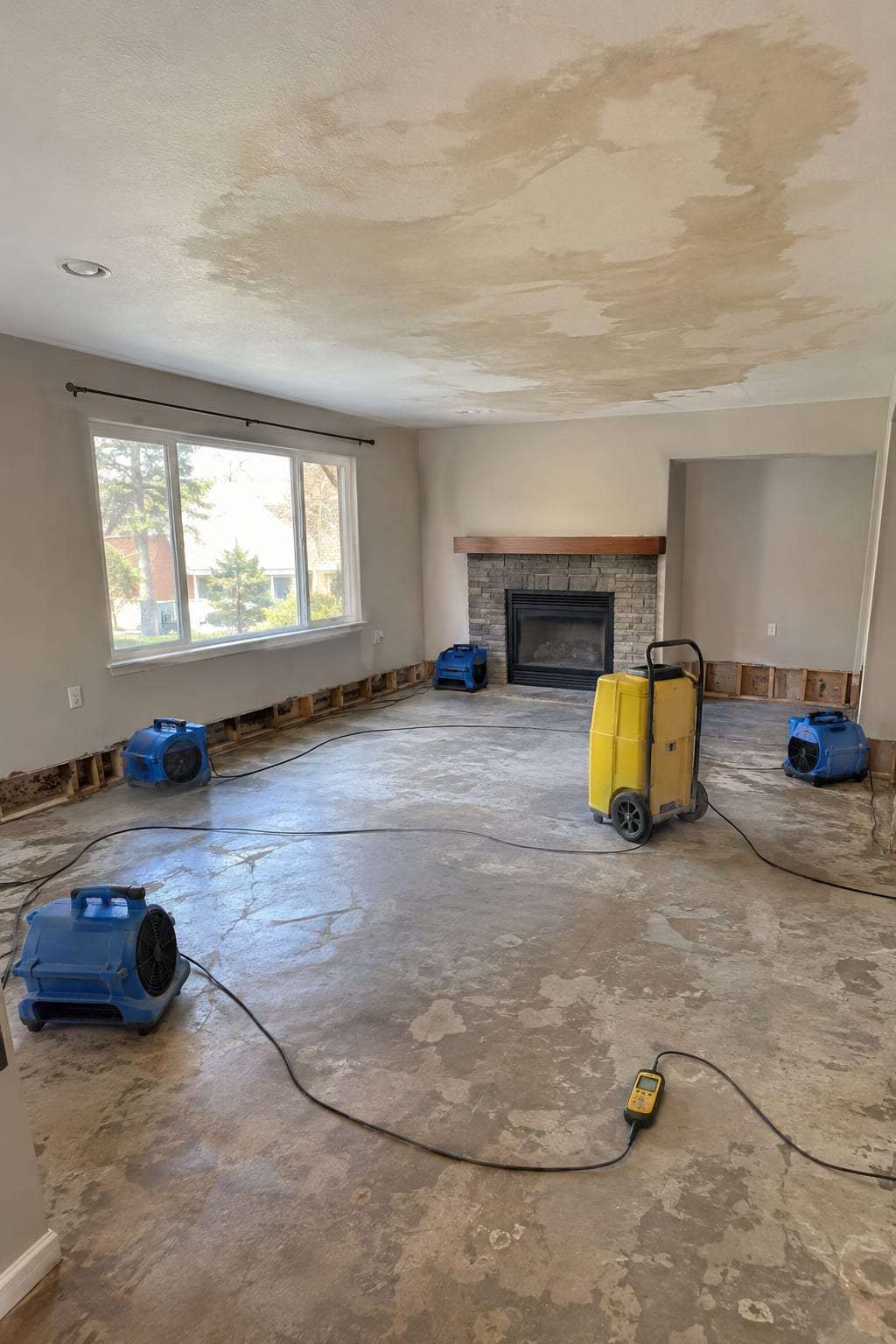
Extraction on turf flooring in an open-plan home.
From a wet floor to a dry reading, in five stages
Extraction gets the water out. The stages after it prove the building is dry before anyone closes a wall or reopens a space.
-
Assess
Find the source, map how far the water traveled with a moisture meter, and decide whether it's clean or contaminated.
-
Pump and extract
Pumps and truck-mounted or portable units pull the deep water first. Wands and weighted extractors then go over carpet and hard floors.
-
Remove what can't be dried
Cut out saturated pad, baseboard or insulation that won't dry in place, and photograph everything that leaves the building.
-
Dry and monitor
Run dehumidifiers and air movers, and log moisture readings every day until each material reaches its drying goal.
-
Restore
Schedule repairs so residents, tenants or customers come back to a space that tests dry.
A dehumidifier pulling moisture out of a carpeted hallway.
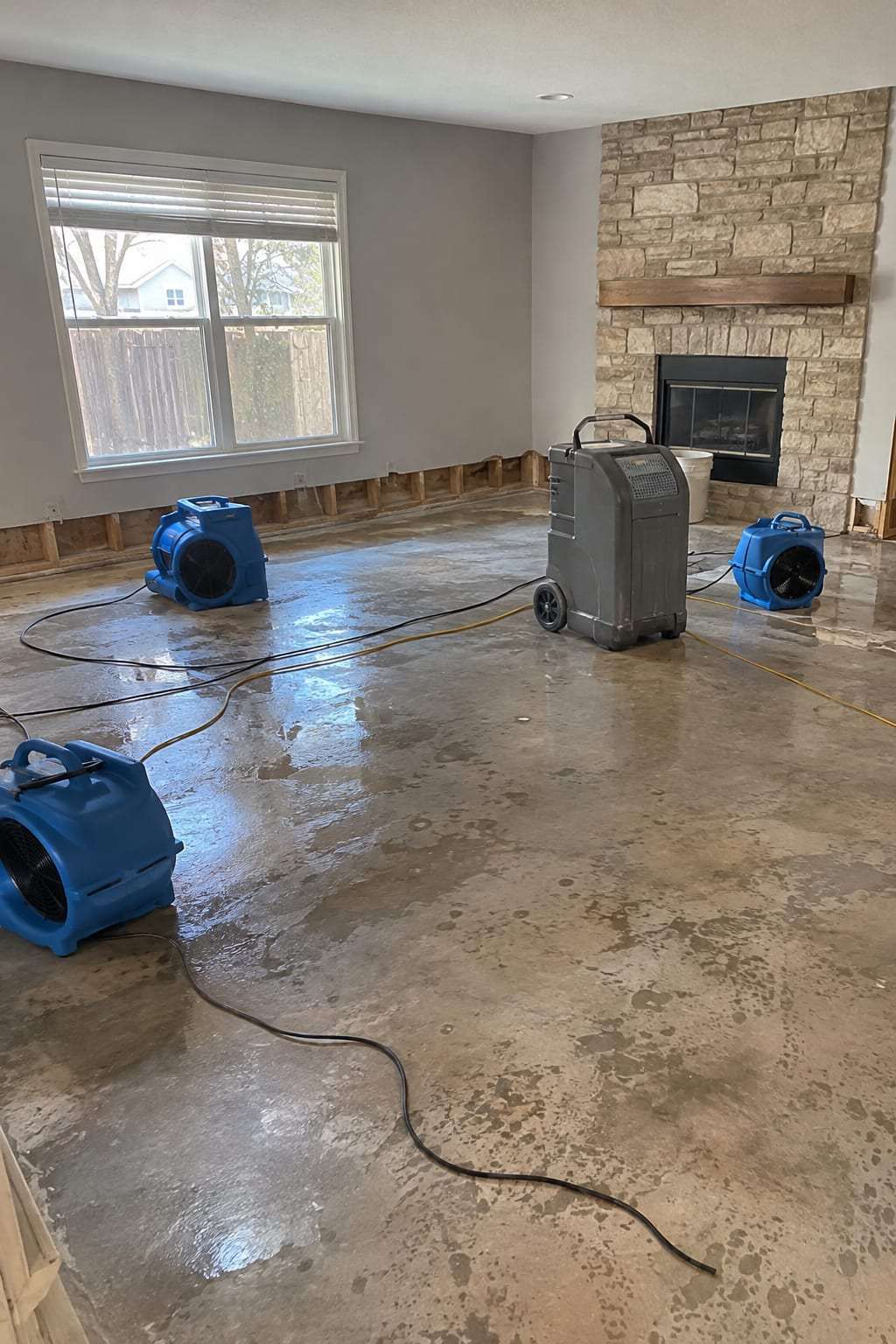
A floor with no puddles can still be wet underneath. Dry is a number on a meter.
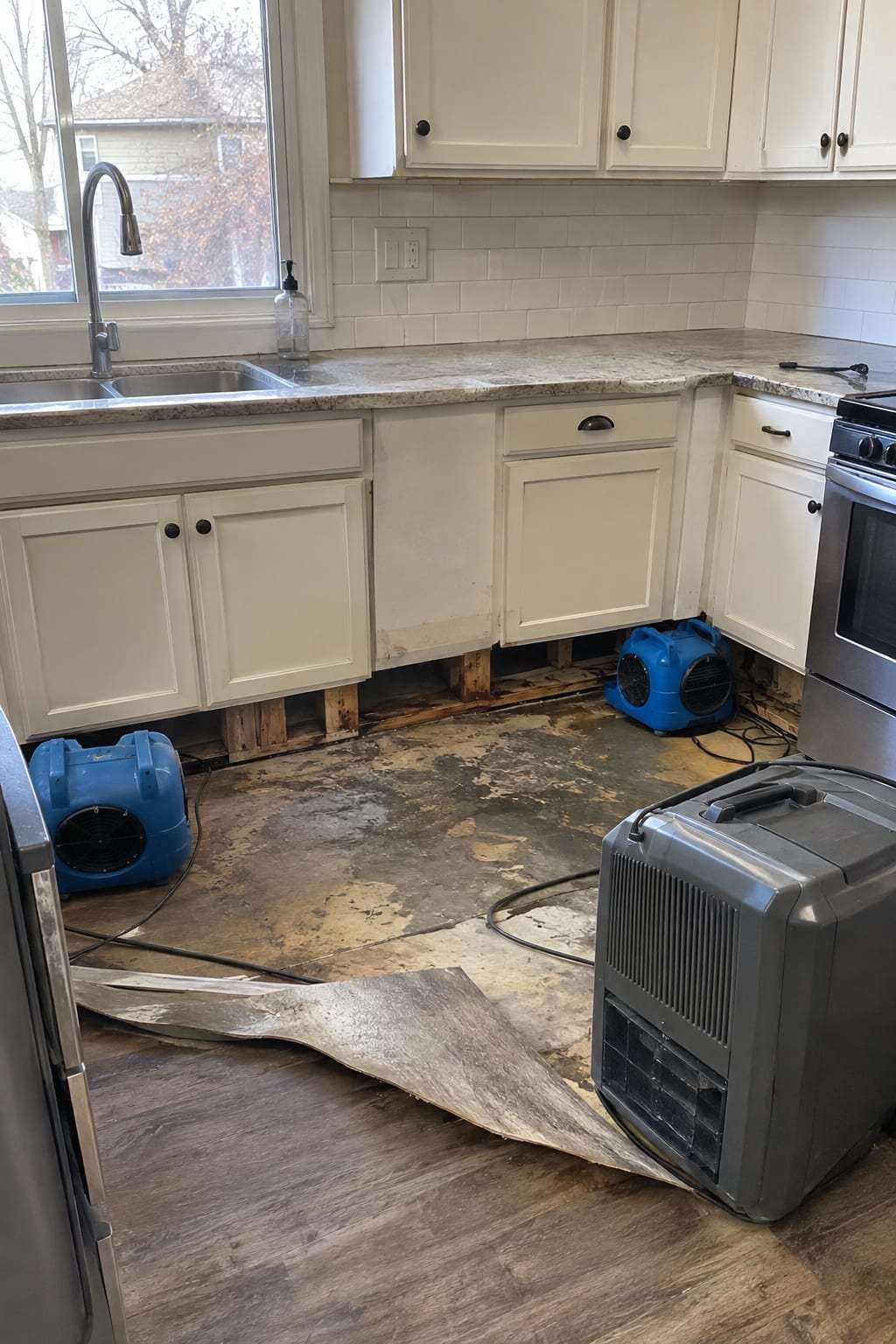
An air mover and a dehumidifier working a tiled sunroom.
The first hour
Four things to do and four to avoid while you wait for help. None of them needs a tool.
Do
- Stop the source. In a commercial or shared building, tell the property manager or facilities lead now.
- Cut power to wet areas at the panel, but only if you can reach the panel without standing in water.
- Lift inventory, files, rugs and electronics off the floor and carry them to a dry room.
- Keep people out of wet rooms so nobody slips or tracks water into the dry ones.
Don't
- Wade into water near outlets, a panel or equipment that may still be live.
- Leave inventory, files, rugs or electronics sitting on a wet floor while you wait.
- Let people walk through wet rooms and carry water into dry ones.
- Shut off the main supply of a shared building yourself. It cuts water to every occupant, so the property manager or facilities team makes that call.
One city, three counties and a long list of building types
Aurora is Colorado's third-largest city and reaches into Arapahoe, Adams and Douglas counties. It runs from mid-century neighborhoods in the northwest to master-planned communities in the east and south, with a deep stock of apartments and townhomes between them. It's also an employment hub for medical campuses, aerospace, retail and distribution.
Each of those buildings gets wet differently. A 1960s ranch basement, a slab townhome, a medical office full of sensitive equipment and a store losing sales every day it's closed all need different plans. Ask any company whether it works on homes, commercial space or both before you hire it.
- Large commercial losses take more equipment and a bigger crew. Ask whether a company has handled large-loss work.
- Commercial managers should ask how drying and repairs can be phased around business hours.
- Older Aurora homes often still have aging water heaters and galvanized or early plastic supply lines worth a look.
- Plenty of companies that serve Aurora are based elsewhere in the metro. Ask how long the drive is before you commit.
ZIP codes served: 80010 (Aurora), 80045 (Aurora), 80247 (Denver), 80012 (Aurora), 80011 (Aurora), 80014 (Aurora), 80017 (Aurora), 80013 (Aurora), 80015 (Aurora), 80018 (Aurora), 80019 (Aurora), 80016 (Aurora), 80137 (Watkins).
Also nearby: 80230, 80220, 80238, 80207, 80266, 80246, 80239, 80224, 80206, 80231, 80205, 80218, 80209, 80222, 80216, 80203, 80210, 80202.
Go deeper on water removal
Longer guides, worksheets and walk-throughs for Aurora homes, apartment buildings and commercial space.
- Services
Each guide takes one problem and follows it to the end.
- Resources
Print one, fill it in, hand it to the next person.
- Service Area
Aurora spans three counties and several generations of building.
Questions people ask with water on the floor
Questions to ask any water removal company before work starts
How fast does standing water need to come out?
Today. Materials keep soaking it up for as long as it sits, and mold can start growing on damp materials in roughly 24 to 48 hours.
Can wet carpet tile in an office be saved?
Sometimes. After a clean-water leak, tiles can often be extracted and dried, depending on the backing, the adhesive and how long they stayed wet. Tiles that touched contaminated water usually get replaced.
What's the difference between water removal and water mitigation?
Removal means pulling out standing and absorbed water. Mitigation is the whole effort to limit damage: removal, plus cutting out materials that can't be saved, drying and daily monitoring.
Is floodwater from outside handled differently?
Yes. Outside floodwater and sewage count as contaminated. Porous materials they reach usually come out, and every surface left behind gets cleaned and sanitized.
Can the work happen around business hours?
Often. Extraction usually starts right away, and later stages get planned with the property contact. Ask about scheduling and phased work before you sign anything.
Do I need to file an insurance claim before calling for help?
No. Most policies expect you to limit the damage right away. Start mitigation, then notify your insurer as soon as you can.
Water came from the unit above mine. Who calls the restoration company?
Report it to your property manager or HOA right away. They usually authorize work in shared areas and in the source unit. You can still call a company about your own unit, but the response moves faster when management coordinates access to every affected unit.
Water on an Aurora floor right now?
Stop the source, keep people out of wet rooms, photograph everything and tell your insurer or property manager. Then choose a water removal company you have checked. If anyone is in danger, call 911.
What a good first call covers
Expect questions about the source, how much floor got wet and what kind of property it is. For a commercial space, mention business hours, access rules and any equipment or inventory at risk. Before you hang up, ask what happens next, when someone can realistically arrive and whether you'll get the scope of work in writing.
Describe the water problem
This form is not connected. This website is a draft preview: no business has been confirmed to receive requests, so the fields below are switched off and nothing can be sent. In an emergency, call 911.