Modular carpet tile is the standard floor in a lot of Aurora office parks, medical buildings and school administration space. Broadloom sits over a pad. Tile usually sits right on concrete or raised flooring, held by a pressure-sensitive adhesive. With no foam layer to soak up water, you're ahead, but water can still travel along the seams and under the backing, where nobody sees it and it dries slowly.
Three questions drive the decision: how far the water went under the tiles, what kind of water it was, and whether the adhesive will grip again once the floor dries. A hard-surface or carpet wand clears the surface water fast. The next step depends on what a moisture meter reads under the tiles at the edges of the wet area.
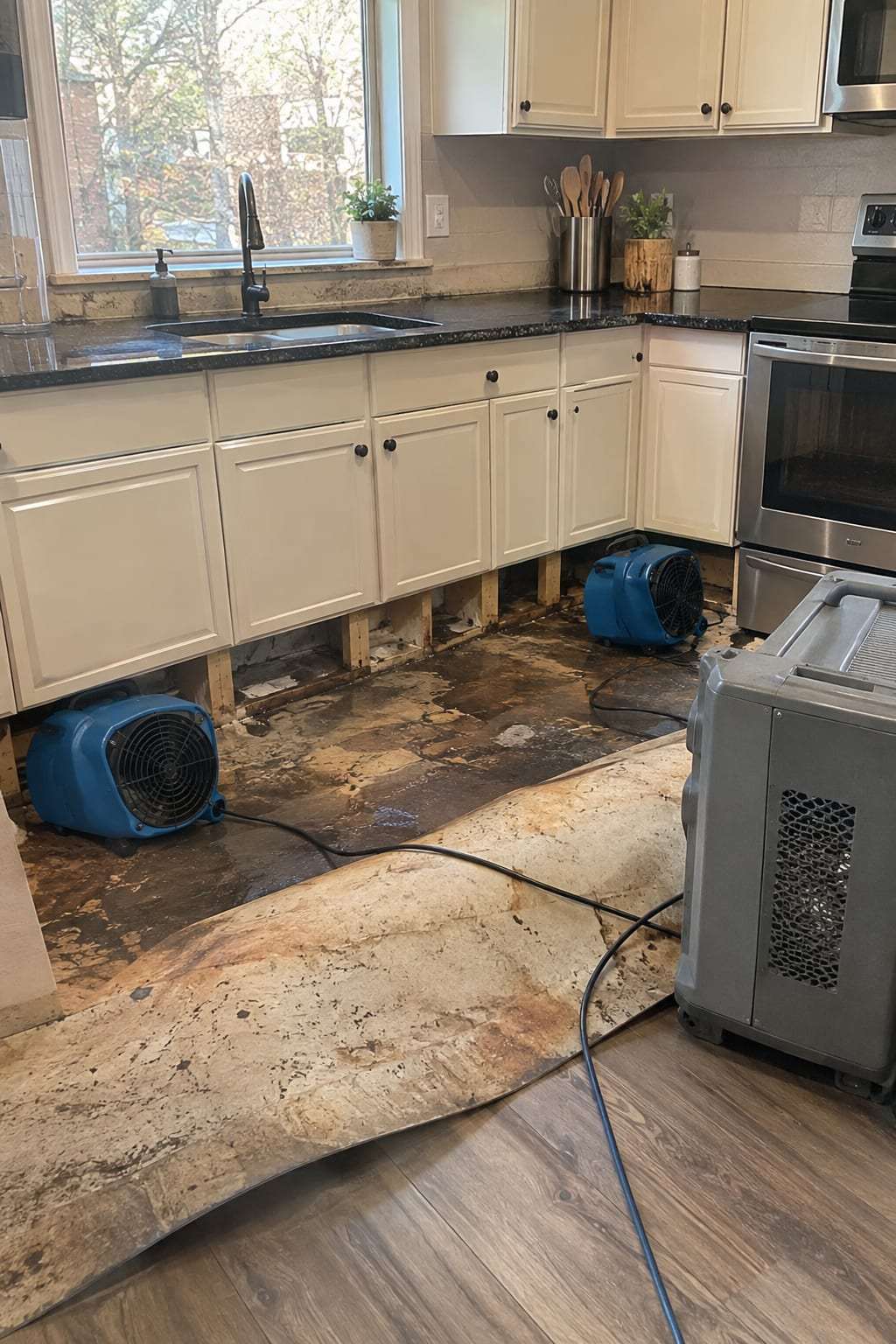
Common paths for wet carpet tile
- IfClean water, found fast, and tiles lie flat after extractionThenExtract thoroughly and dry in place with air movers and dehumidifiers, taking readings at the seams.
- IfWater spread under the tiles and the concrete reads wetThenLift the tiles in the wet zone, stack them to dry or discard them, and dry the slab directly.
- IfThe water came from a toilet, a drain line or outdoorsThenAffected tiles usually get replaced, and the slab gets cleaned before new tiles go down.
- IfTiles curl, edges lift or the backing feels softThenPlan on replacement. Distorted tiles put back down become trip hazards.
What tips the decision
| Factor | Points toward saving | Points toward replacing |
|---|---|---|
| Water type | Supply line, clean sprinkler water | Drain, toilet, outside water |
| Time wet | Found the same day | Found after a long weekend |
| Backing | Firm, flat, springs back | Soft, curled or separating |
| Adhesive | Releasable tackifier that grips again | Adhesive that turns gummy or loses grip |
| Spare stock | Attic stock left from the original install | Discontinued pattern, risk of a color mismatch |
| Area affected | A few rows near the source | A large share of the suite |
Office tasks during extraction
- Clear cords, power strips and floor boxes out of the wet area before anyone extracts
- Set desk legs and file cabinets on blocks, or move them, so the tiles underneath can dry
- Number lifted tiles with tape if they'll go back in their original spots
- Ask facilities whether spare tiles from the original install are stored on site
- Note which workstations are affected so staff can relocate while it dries
- Keep the HVAC running unless the contractor says otherwise. Conditioned air helps drying
Questions to settle with the landlord or contractor
- Who owns the flooring, the tenant through its improvements or the building?
- Can drying run after hours so the suite stays usable during the day?
- How will you check moisture under the tiles at the edges of the wet area?
- If tiles get replaced, how will you handle color and dye-lot differences?
- Will the adhesive under the tiles allow them to go back down once dry?
General information for Aurora, not a quote or professional advice. In an emergency, call 911.