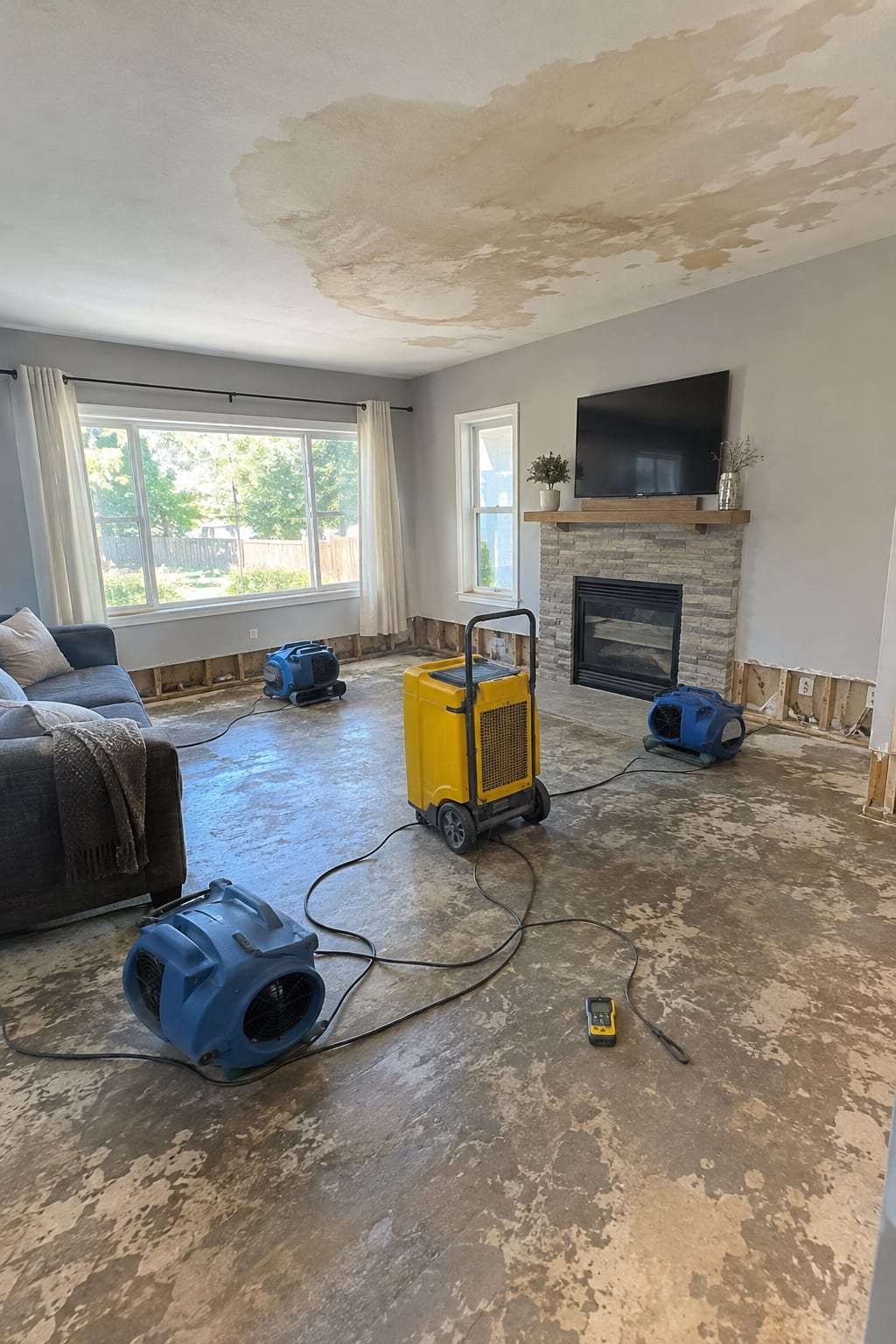
What a water loss looks like in retail
Aurora's shopping centers, strip retail along the major arterials and big-box stores near the interstates share features that shape a water loss. Floors are usually sealed concrete, vinyl composition tile or commercial carpet. Fixtures and gondola shelving sit right on the floor, often bolted down. Back rooms hold inventory on pallets and low shelves. Restrooms, break rooms and rooftop equipment cause a lot of the leaks.
Hard floors cut both ways. Water doesn't soak in, so extraction goes fast, but it travels a long way before anyone notices: under fixtures, into wall bases and beneath the bottom shelf of every aisle. Drywall partitions between the sales floor and the stockroom often wick water up from the base. The job is to extract the open floor fast, find where water slipped under things and dry those spots without closing the whole store.
A sequence that often reopens a store sooner
- Immediately
- Stop the source, rope off the affected aisles, pull bottom-shelf inventory forward or move it, take photos.
- Same day
- Extract the open floor, find water under fixtures and pallets with a meter, and separate and inventory damaged stock for the claim.
- Overnight
- Set drying equipment along wall bases and under fixtures, placed so aisles can reopen where the floor is dry.
- Following days
- Reopen in part, with containment around the zones still drying. Log readings until wall bases and floor joints reach their goals.
- Final phase
- Repair base trim and drywall after hours, reset fixtures and reopen the full floor.
Store manager's checklist
- Wet-floor signs and barriers at every way into a wet zone
- A list of damaged inventory with SKUs, quantities and photos before anything gets thrown out
- Food service: ask your county public health agency what must be discarded and when you need an inspection
- Confirm both the landlord and the store's own insurer have been told
- Keep receipts for extra labor and rentals, plus lost-hours records for a business interruption review
- Agree on which aisles can open with equipment running, and how the cords will run
Questions for the contractor
- Can drying be phased by section so some aisles reopen first?
- Will equipment noise or airflow be a problem during business hours, and can it run quieter or overnight?
- How will you dry under bolted fixtures without pulling them out?
- What documentation will support a business interruption claim, if the policy includes one?
Common questions
Can a store stay open during drying?
Often, in part. With wet areas contained and cords managed, many stores reopen their dry sections while drying continues elsewhere. The landlord, the insurer and, for food service, health officials may also weigh in.
General information for Aurora, not a quote or professional advice. In an emergency, call 911.